CreARTivity
Magazine
Inside Symphony in C, the Camden orchestra built for young professionals
In its 75th anniversary season, Symphony in C is a Camden orchestra where young professionals learn the trade. Music director Noam Aviel, a former jazz bassist, explains how it works and what audiences can discover.

In this article
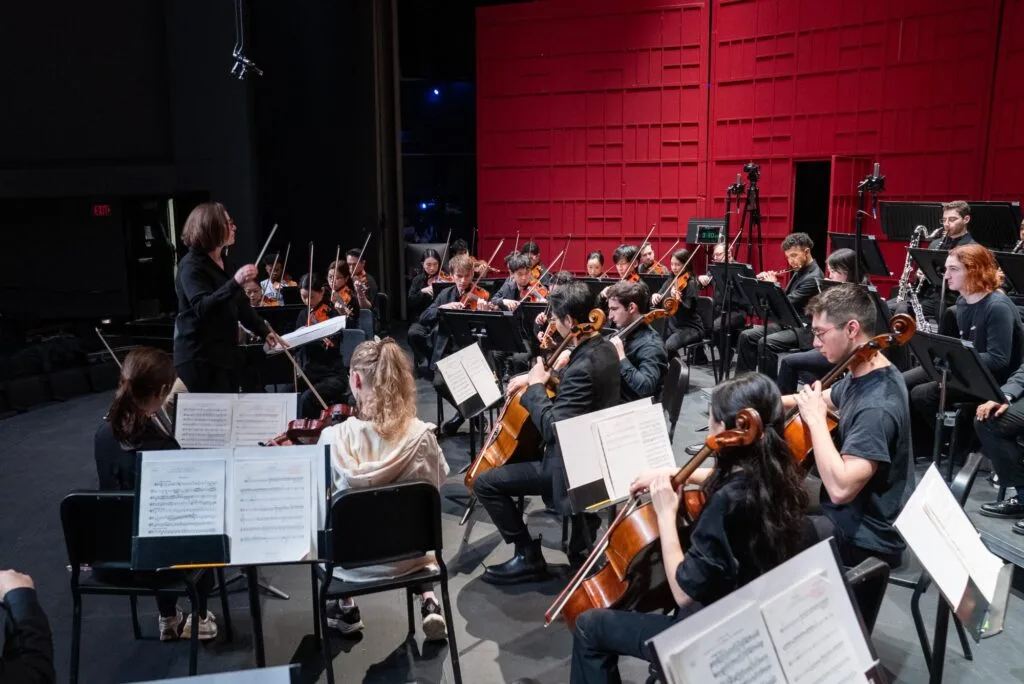
Symphony in C opened its 75th anniversary season with Mahler’s Symphony No. 5, one of the most demanding works in the repertoire. The orchestra had four rehearsals to prepare it. The players were young professionals, and that is exactly the point: Symphony in C, which performs in Camden, New Jersey, exists to give talented young musicians the experience of the professional world before they enter it. The orchestra’s president is Pam Brant.
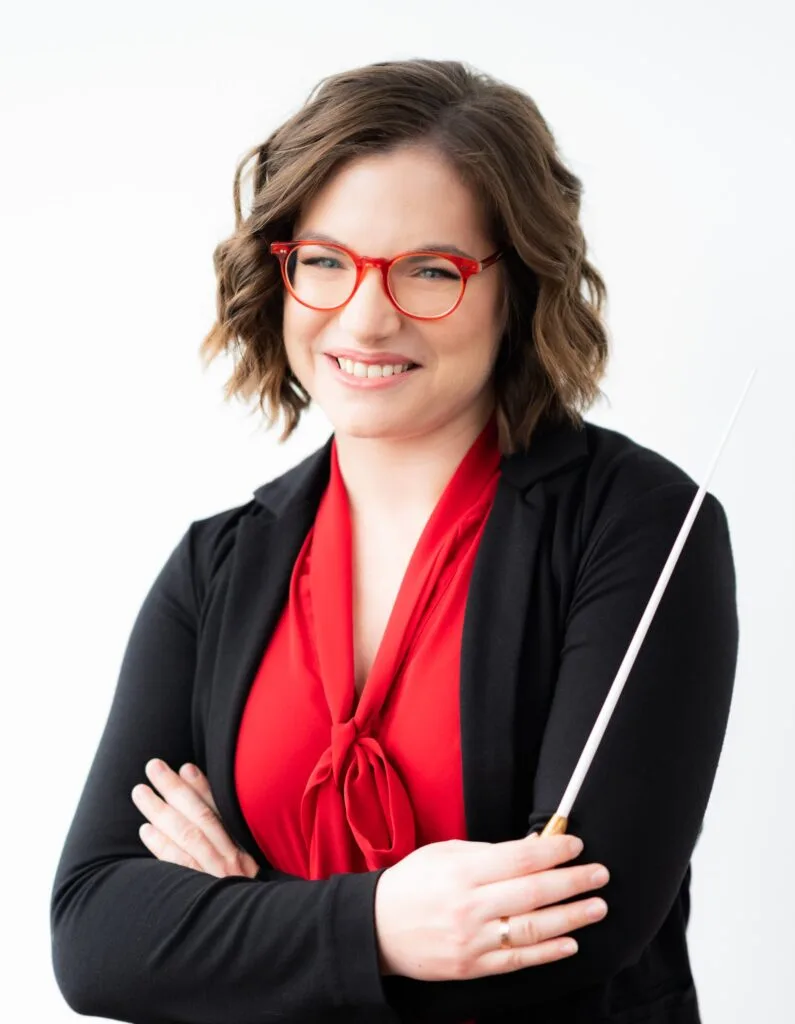
To understand how the orchestra works, CreARTivity Magazine spoke with its music director, Noam Aviel, on Sunday, October 11, by video call. Noam was in Knoxville, Tennessee, conducting a month-long production of Die Fledermaus with Knoxville Opera. Her own story, from jazz bassist to conductor, turns out to say a good deal about the orchestra she leads.
An orchestra of young professionals
Noam describes Symphony in C simply. “It’s a special orchestra. It’s an orchestra of young professionals that are both at the top level in the country and are also hungry and eager to play classical music,” she said.
The players now come from well beyond the neighborhood. The orchestra’s core once consisted mostly of musicians based nearby, such as recent Curtis graduates. “We have many more musicians also coming from Juilliard, from Yale, and we have musicians from Princeton University,” Noam said. Audition standards have risen along with the distance people travel to take part. “This has to be valuable enough for them to make that effort, and that’s what I try to do, to make it valuable for them in the end, to want to come and play, and they get something meaningful out of the experience.”
From Haddonfield to Camden
Symphony in C was founded in 1952 as the Haddonfield Symphony. Noam said it began as a semi-professional orchestra and became more professional over time, but the decisive change came when it redefined itself. “The big change was when the identity changed for young professionals,” she said, together with the move from Haddonfield to Camden.
The move was about more than a new address. “Part of the vision of coming to a place that you are part of its development was an important part of the move of the symphony,” Noam said. The name reflects it: the orchestra stands for Camden. Noam was not with the orchestra at the time of the move, but she said she knows how much the city has developed over the years, “also thanks to the orchestra.”
The conductor who came in sideways
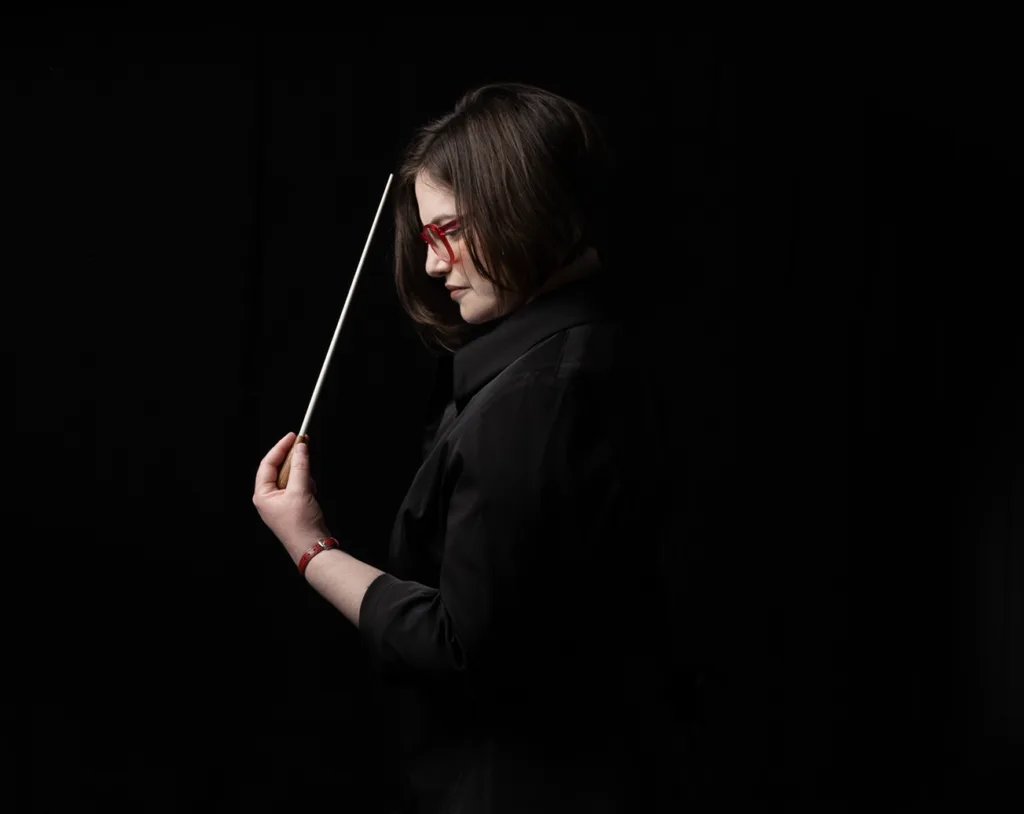
The person guiding the orchestra today did not take the usual road to the podium. “I started out as a jazz musician. I was a bass player and singer. It’s not the usual, typical route of classical musicians, but I fell in love with classical music at a bit of a later age,” Noam said. She began as a voice performance major, and it was during those studies that the orchestra caught her. “I fell in love with the orchestra and with conducting, and so I continued both paths and then continued furthermore into conducting.”
Her first job in the field was as assistant and then associate conductor of the San Antonio Symphony. She went on to guest conduct in the United States, Israel, Europe and South Africa, and in Iceland, where she worked with the Iceland Symphony. Becoming music director of Symphony in C brought her to live in the United States. “I have a great position, a great job that I put my heart and soul into, and I’m very grateful for that,” she said.
Her path across the Atlantic was also a professional decision. When she was studying and set on becoming a conductor, Noam felt the United States was more open to women on the podium. “It’s challenging enough to become a conductor, but also, when you are a woman who’s conducting, who’s in a leadership position, it’s another step that you have to achieve and push through,” she said. “I thought that in the United States there was, at that time, a better attitude towards female conductors.” She added that things have improved elsewhere over the decade she has been in the profession, “but at that time that was my feeling.”
A music director, not a guest
Leading Symphony in C meant something different from guest conducting. “When you’re a music director, it’s different than just coming as a guest conductor. You can really shape not only the artistic vision of the orchestra, but you also shape the heart and mentality of the orchestra, the attitude,” Noam said.
She used that freedom to give the musicians a feeling of security. “The most important thing was to create a safe space for the musicians to feel that they can spread their wings,” she said. The orchestra’s mission is to help players move from being students to playing in professional orchestras across the country, and Noam wants to take them out of the strict, competitive environment of a university and let them feel “that they are independent artists that can express themselves and have room to make errors.”
Training on a professional schedule
Inside the rehearsal room, the orchestra works the way a professional one does. “In the university you have a whole semester to put on a program. But in the professional world with professional orchestras you have just a few rehearsals and you have to perform a huge challenging program,” Noam said. Mahler’s Fifth was the recent example. “A massive work, and we had four rehearsals to do it in,” she said. The schedule teaches players to arrive prepared and to build a powerful result together in a short time.
The repertoire is chosen with their careers in mind. Noam said the orchestra tries to program works the musicians will meet in professional orchestras, so that they arrive at their first jobs already familiar with them. “I feel confident because I’ve already played Beethoven 9, I’ve already played Mahler Five” is the feeling she hopes they take away.
Many of the players have never performed the great masterworks, so the orchestra gives them that chance. “These musicians sometimes have not played the masterworks ever before, they need their first time to play these masterworks,” Noam said. “There’s a musician who’s always dreamed to play Beethoven 9. We want to give them that opportunity to fulfill that dream.”
Players also get to step forward as soloists, which is not always possible at the universities where they studied. “A lot of times the universities bring these stars from outside to be featured as the soloists with the orchestra,” Noam said. “We want to give them opportunities that they don’t necessarily have where they study or in their background.”
What the players take with them
Noam’s hopes for the musicians go beyond technique. “I hope that they continue with a healthy and positive attitude in the profession,” she said. “Playing in an orchestra for many years requires all kinds of resilience … you have to have a healthy mind.”
That means unlearning some of their training. “It’s very important for me to help them be their best colleagues to themselves. Perfectionism is not always the goal,” Noam said. “They come from their whole life, they trained for perfectionism, to be perfect. But actually, what makes music interesting and special is that you experiment, you dare, you have something to say, you bring something to the table.”
Live music, she added, has its own lesson. “Anything can happen in live music. There are some concerts that are better than others and that is part of life.” Excellence is something the players bring from their universities, she said, but “how to live happily in the profession, that is something I hope that we can give them.”
A concert hall that feels like family
The orchestra has to serve two audiences at once, the players and the public. “That’s the thing we have to find, things that are both exciting for the musicians and exciting for the public,” Noam said. “It’s not always an easy thing to do, but I think also, it’s quite special that the Camden community has such a high-level professional orchestra in their backyard.”
For first-time listeners, the atmosphere is part of the appeal. “There’s a very family atmosphere with our audience,” Noam said. “They really come also to see the development of these musicians, to see the musicians of the future of classical music in the country.” The orchestra hopes to reach as wide an audience as possible, in Camden and beyond. “It’s a very open feeling and welcoming feeling to anyone who wants to hear classical music for the first time,” she said, adding that the orchestra’s doors are, as she put it, “always open.”
The 75th anniversary season
This is the orchestra’s 75th anniversary. “We’ve put together big programs,” Noam said. After the Mahler opener, “the next one is Rimsky-Korsakov’s Scheherazade, which is a wonderful piece.”
There are also new collaborations. A family concert with Enchantment Theater Company will feature human-sized puppets on stage while the orchestra plays. The orchestra is also working with the Rutgers-Camden Theater Company on the musical No, No, Nanette. “It’s both professional actors and students from the theater department of Rutgers-Camden and our musicians,” Noam said. The season continues with Grieg’s Piano Concerto, Beethoven’s Symphony No. 7 and a Schumann symphony, and it ends with Gershwin. “It will be an exciting season and I’m really eager to bring the music to life with the orchestra,” she said.
All information about concert dates, venues, tickets and the musical can be found on the orchestra’s website, symphonyinc.org.
Sources: Interview with Noam Aviel, music director of Symphony in C, conducted by CreARTivity Magazine on October 11, 2026; Symphony in C, symphonyinc.org.
Author

About the author
Marie Juliane DAVID
Marie Juliane David is a multilingual journalist, poet and novelist, and the founder and Director of Publications of <em>CreARTivity Magazine</em>, which she launched in January 2026 and publishes daily in English, French, Spanish and Haitian. To learn more about her and her work, visit her <a href="https://mariejulianedavid.com/" target="_blank" rel="noopener">portfolio</a>.
Leave a comment
Your email will not be published. Comments are moderated before they appear.