CreARTivity
Magazine
A museum for everyday hands: inside Madison’s Museum of Early Trades & Crafts
Executive Director Deborah Farrar Starker talks about quilts, pottery, a historic library building and the New Jersey museum that tells history through ordinary people.

In this article
In the former public library at 9 Main Street in Madison, New Jersey, the objects on display were not made for kings or generals. They are quilts, pottery, farm tools and a very large printing press, the belongings of ordinary people who built communities in the Garden State. The Museum of Early Trades & Crafts (METC) has told their stories for more than five decades, and its Executive Director, Deborah Farrar Starker, spoke with CreARTivity Magazine about what it takes to keep that mission alive.
“The museum is really a treasure,” Deborah says. “Its main focus is education, but it’s a unique museum that combines a historic building, an extraordinarily beautiful building, with a comprehensive collection of New Jersey artifacts that tell the stories about people who created communities and who lived and worked here.” The collection follows New Jersey’s evolution from early settlement to industrialization, told through the lens of home, shop and farm.
A collection built on ordinary lives
The museum was incorporated in 1969, and its founders were educators with a particular vision. “They knew that many museums focused on the wealthy people, the generals, the inventors, and the famous people,” Deborah explains. “They really wanted to make sure that the stories of the everyday people, the farmers and the shopkeepers, the artists, the artisans, those stories were important to them, because they felt that those are the people who really created the communities.”
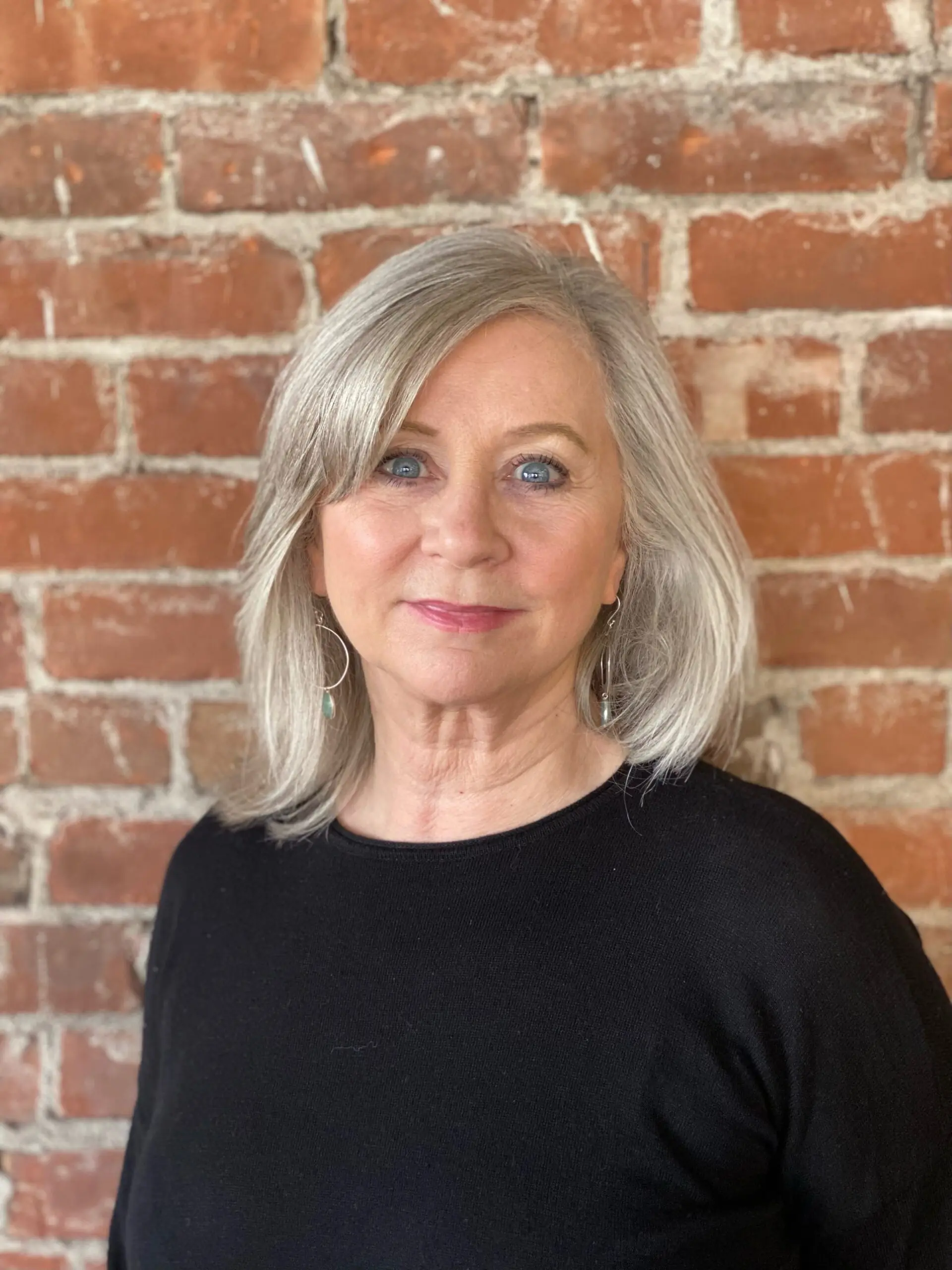
That founding collection numbered about 4,000 items. Today the museum cares for roughly 8,000 artifacts, textiles and archival materials. Most were made by hand: tools, pottery, textiles and the farming equipment that helped families earn a living, open shops and teach their children. Deborah is candid about what the collection is not. “We don’t have the Declaration of Independence or anything like that. We really do have things that meant a lot to individual people.”
The building itself is part of the story. Completed in 1899 as Madison’s first public library, it stood empty for a few years after the library moved out in 1967, until the town agreed to let a museum take its place. Its Richardsonian Romanesque Revival architecture is listed on both the state and national registers of historic places. The town of Madison owns the property and lets the museum occupy it without rent, but the responsibility is shared unevenly. “We have a responsibility as the tenants of this building, as the caretakers of the building, to restore the building and preserve it architecturally,” Deborah says. “Most of the stewardship is on us.”
An older building brings older problems, among them moisture that is far from ideal for a collection. After several years of grant writing and fundraising, the museum completed a $1.3 million viewable storage facility on its lower level. “It’s a state-of-the-art facility that has its own HVAC. It’s got special lighting, movable cabinetry,” Deborah says. Assessments and conservation work are now underway. “This is the material culture that people left behind, and we want to make sure that we preserve these for future generations.” A viewing window lets visitors watch curatorial staff at work, a glimpse behind the scenes that most museums keep out of sight.
Craft, art and the stories behind the objects
Asked whether one object keeps drawing her back, Deborah names a category instead. Textiles are her favorite. “We have shawls and blankets, and they were mostly made by women, for their families, to be utilitarian, to keep them warm. But each woman also added her own personal artistic flair to it,” she says. “I always find them fascinating because I want to know the story. What was this woman thinking of when she was creating this quilt? Was it for a baby? Was it for an older child? Was she getting married?” Pottery is another strength. New Jersey was a major center of ceramics in the eighteenth and nineteenth centuries, particularly around Trenton, and the museum holds representative pieces by Fulper and Stangl. “They’re just beautiful,” Deborah says.
Then there is the printing press, which makes an impression on the roughly 5,000 to 6,000 students who visit each year. “They’re used to using iPads and technology. And for us to talk to them about this printing press and say, you have to set the type, you have to make sure that there were no typos, and you had to print them one at a time, it really brings full circle how important communication is, and how it’s changed over two centuries.” The press has a local pedigree too. “It was used in a company that is very local here in New Jersey, so it has that added benefit of being a piece that we know the people who used it.”
With the nation marking the 250th anniversary of the American Revolution, the museum’s current exhibition, So You Want a Revolution, looks at the war from the kitchen table rather than the battlefield. “New Jersey is still known as the crossroads of the American Revolution because so much happened here,” Deborah notes. The exhibit follows loyalists, patriots and the undecided. “It uprooted families, it destroyed businesses, and the regular flow of life was just changed.” Skilled tradespeople are central to that picture. “Blacksmiths, surveyors, mapmakers, they were all working for the armies. They were producing metal, ammunition, maps. These are people who may not have been fighting physically, but were supporting.”
Exhibition themes are chosen collaboratively by Deborah, the curator and the educators, balancing what visitors want to see with timely subjects and the strengths of the collection. Past shows have explored the role of women and the kitchen over a hundred years, transportation, farming and the building’s own architecture. The museum also works to include voices that are often left out. “We have a very diverse audience, so we try to make sure that at least some of the exhibits reflect the people, and people can see themselves in those stories.” That includes the Lenape, who lived on this land for thousands of years. “It’s a New Jersey story, and it doesn’t just begin when the English and Dutch settlers came over here.”
For a magazine devoted to the arts, the question of where trade ends and art begins is an obvious one, and Deborah does not hesitate. “Everything that is in this museum has been made by hand, and that is art. People working with their hands, people being creative, from the simplest hand tool to an elaborate quilt.” The museum cultivates that overlap through partnerships with local artists, students and, more recently, the Book Arts Roundtable, a group of New Jersey artists who collaborate on exhibitions. “That kind of straddles that liminal space between arts and crafts,” Deborah says. “We’re constantly looking for ways to integrate all these different ideas in creativity.”
Live craft demonstrations happen only occasionally, because space in the historic building and its education annex is limited, but the recent Bottle Hill Day showed what is possible. The museum and its partners created an eighteenth-century setting in downtown Madison, with a regiment carrying out drills, period musicians and craftspeople practicing basket weaving, stitching and leatherwork. Deborah estimates that about 40,000 people attended, a figure she heard from the mayor.
Education, funding and community support
The education program is the museum’s core. Field trips are built around the curriculum, developed with teachers across the state, and scholarships supported by grants, corporations and foundations help schools with fewer resources make the trip. “Transportation is probably the biggest expense, so we try to make sure that everyone has accessibility,” Deborah says. She has noticed a shift in what teachers and parents want. “They’re moving away from screens and doing things with your hands, being creative, making something.” Touchable artifacts are part of every program, and the first moments of a visit are often the best. “We ask them, what do you think this building was before it was a museum? They’ll say, oh, it was a castle, or it was a church. Is it haunted?” Her conclusion is a simple one. “It is important for young children to learn, not just by watching or listening, but by doing.”
Deborah came to museum work after a career in international marketing and writing, then earned a master’s degree in museum studies. Leading METC, she says, is “my perfect place,” because she lives and works in Madison. What surprised her most was how little the public understands about how museums are paid for. Admission and program fees are kept deliberately low so that cost is never a barrier, which means grants, donations, sponsorships and foundation support cover the staff and the operating expenses. “It’s really hard to raise enough money to do all the things that we try to do.” The pressure has grown with federal funding freezes and shrinking grants. Even so, she is optimistic. “I think it’s cyclical,” she says, pointing to strong governance from the museum’s trustees and a lean, dedicated staff. “There’s been a lot of studies, and it shows that people really trust museums. We’re a great repository of knowledge and of accurate information.”
Her advice to readers is plain. “Just support your local museum. Go to a program. Become a member.” Donations can be made through the museum’s website, and a $150 membership includes access to hundreds of museums across the country through the North American Reciprocal Museums program. The measure that matters most to her is not attendance. “The most important thing is the impact we make, the difference that we’re making in people’s lives.” There is a quieter benefit too. “You’re not just looking at objects. You’re looking at people’s lives. It’s reassuring to know that there were so many people before you who were doing so many wonderful things.”
What comes next
The museum is beginning to digitize its collection so that more of it can be explored online, a natural next step after the new storage facility. In January 2027 it will open an exhibition featuring the artists of the Book Arts Roundtable. Restoration of the front entryway is planned as part of the long-term preservation of the building, and a 2027 lecture series is taking shape, including a program on the Lenape later in the year. Visitors can find hours, programs, membership details and the donation page at metc.org.
Deborah Farrar Starker has served as Executive Director of the Museum of Early Trades & Crafts since 2015. Previously she was Vice President for Programs & Exhibitions at The Morris Museum and President of the Madison Arts & Culture Alliance. At METC she led the development and installation of a new permanent exhibit on working life in New Jersey and has managed several large capital projects, most recently the Viewable Storage Collection Facility. She lives in Madison, New Jersey, and enjoys a five-minute commute to her office downtown.
This article draws on an interview with Deborah Farrar Starker, Executive Director of the Museum of Early Trades & Crafts, on October 23, 2026, and on biographical information she provided.
Author

About the author
Marie Juliane DAVID
Marie Juliane David is a multilingual journalist, poet and novelist, and the founder and Director of Publications of <em>CreARTivity Magazine</em>, which she launched in January 2026 and publishes daily in English, French, Spanish and Haitian. To learn more about her and her work, visit her <a href="https://mariejulianedavid.com/" target="_blank" rel="noopener">portfolio</a>.
Leave a comment
Your email will not be published. Comments are moderated before they appear.