CreARTivity
Magazine
Brazilian Carnival: Joe Jean Charles’ Perspective, Haitian Journalist in Salvador
Haitian journalist, poet and photographer Joe Jean Charles recounts discovering Brazilian Carnival, from a local celebration in Santa Catarina to the frenzy of Salvador.

In this article
Machine translation into other languages is available on the original page.
A Haitian journalist, poet, and photographer who recently settled in Brazil, Joe Jean Charles recounts his discovery of Brazilian Carnival through two experiences: a local celebration in Santa Catarina and the popular frenzy of Salvador. Through his testimony, Carnival emerges as a living heritage, a space of Afro-descendant memory, and a cultural bridge between Brazil and Haiti.
Joe Jean Charles’s experience with Brazilian Carnival begins in February 2025, during the first official edition of the Popular Carnival of São João Batista, in the state of Santa Catarina. More modest than the major celebrations of Rio or Salvador, this local festival struck him for its intensity, closeness, and the active participation of residents. The blocos, though smaller, fully embodied the spirit of Carnival.
As he highlights in his testimony, this first experience represented a local rebirth driven by collective participation: “they embodied the spirit of carnival: community, creativity, and shared joy.”
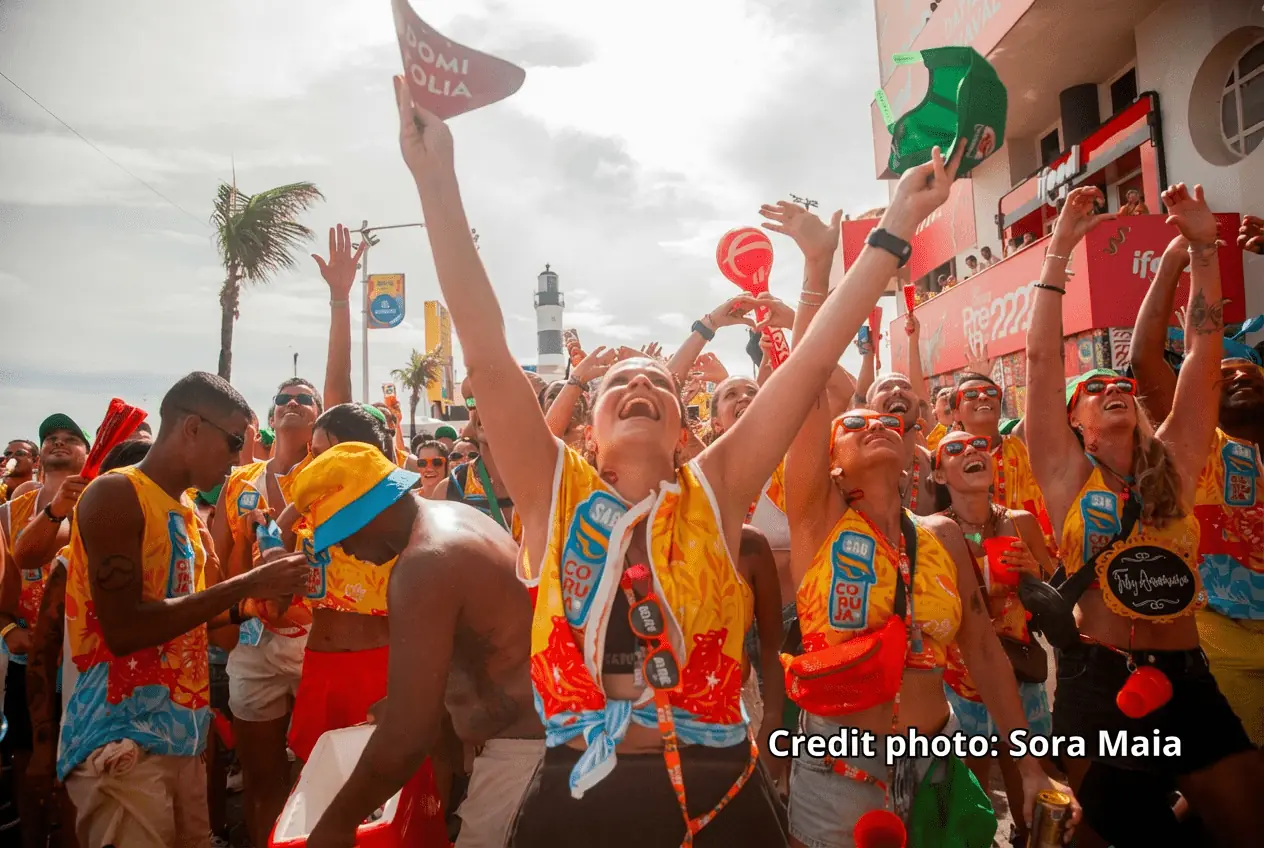
In February 2026, he then experiences the great Carnival of Salvador, in Bahia. This change of scale allows him to discover another side of the Brazilian carnival phenomenon, broader, more historical, and also deeply rooted in Afro-Brazilian memory. This double experience, between local intimacy and popular grandeur, gives him a fuller view of the diversity of Carnival in Brazil.
Joe Jean Charles captures this contrast clearly: “here, in Salvador, carnival is more spontaneous, more organic: it reflects a living, rooted culture, and an intimate connection with Afro-Brazilian traditions.”
He also emphasizes the plurality of carnival expressions in Brazil, far beyond the iconic images of Rio. In his words, “each region thus unfolds its own visual and sonic language, its own dramaturgy,” making Carnival “a metaphor for Brazilian diversity.”
The Afro-Descendant Heritage
As a Haitian, Joe Jean Charles perceives strong resonances between the Carnival of Salvador and those of Port-au-Prince and Jacmel. He mentions Afro-descendant rhythms, the central role of dance, popular artistic expression, and community involvement.
He says it plainly: “Salvador, in particular, reminds me of Haiti, more precisely, the beautiful era of Port-au-Prince and Jacmel.” This closeness appears, in his view, in “its Afro-descendant rhythms, its ritual musicality, and its popular expression.”
For Joe Jean Charles, this resonance belongs to a shared African heritage. He describes a deep connection between the two countries, where “every gesture, every dance step and every sound weaves a dialogue with African roots, an invisible thread linking two continents through time and emotion.”
He nevertheless points out major differences. His observation is precise: “Rio brilliantly codifies its parades through samba schools and monumental floats, while Haiti rather favors an artisanal, satirical approach that is often politically engaged. Salvador, for its part, combines these two aspects: grand spectacle and authentic popular expression.”
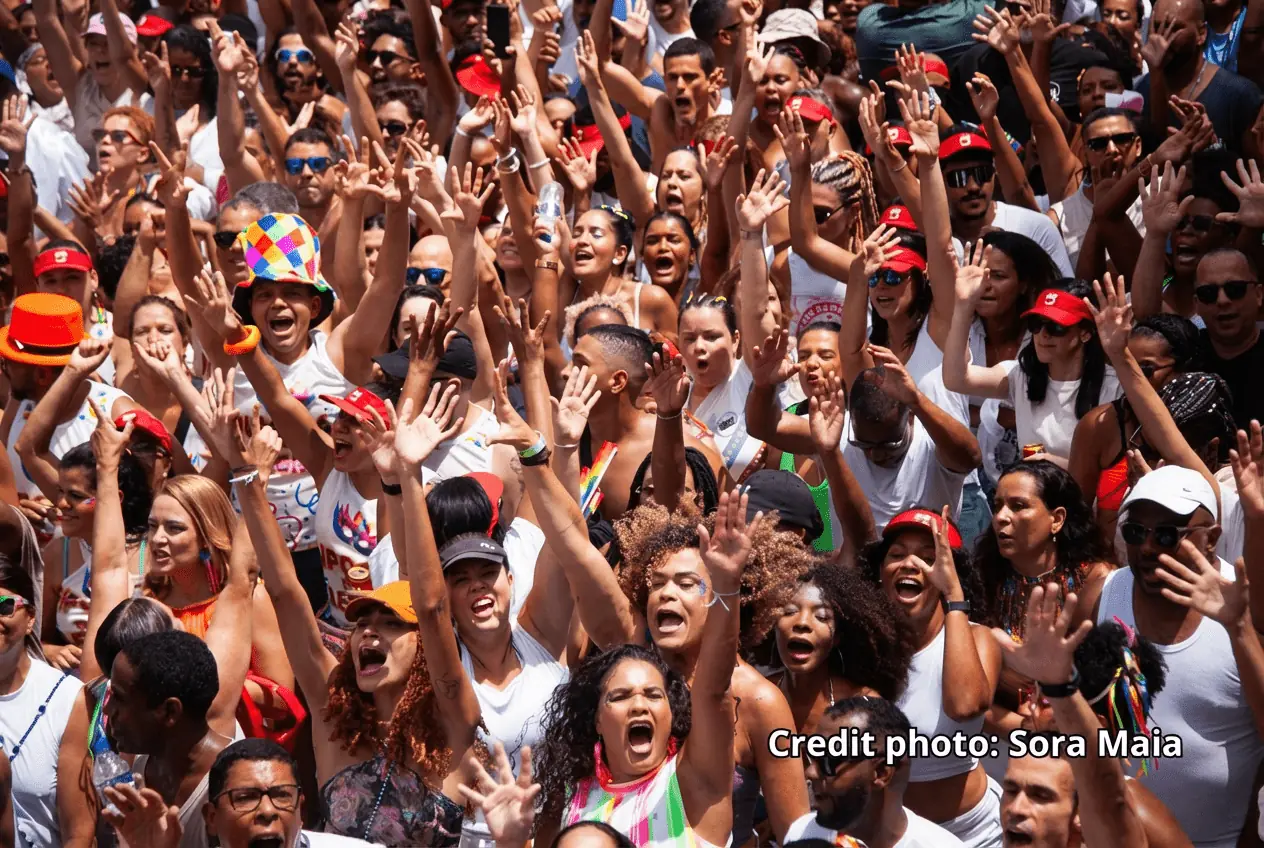
Beyond the celebration, he sees Carnival as a mirror of Brazilian identities. In its regional diversity, he finds a key to understanding contemporary Brazil. As he puts it, “Brazil is not unified by a single festive face, but by a complex set of regional traditions, historical narratives, and living heritages.”
One of the most striking aspects of his testimony is immersion in the blocos. Joe Jean Charles insists on an essential point: “You don’t just watch: you live the celebration with every fiber of your body.” At the heart of the crowd, carried by drums, chants, and rhythms, he feels an immediate communion with participants. As a photographer and poet, this immersion allows him to capture raw images and emotions, to grasp the soul of the crowd and the poetry of movement.
A Feeling of Universal Brotherhood
He also describes Brazilians’ welcome as warm, inclusive, and curious. This openness makes integration easier and nurtures a real sense of belonging. He notes that taking part in Carnival means being welcomed into “a community that is fleeting but deeply supportive, where differences fade to the rhythm of the music.”
In Salvador, this experience strengthened his integration while also reviving his Haitian roots. He speaks of “a feeling of universal brotherhood” and “a true immersion in the popular soul.”
Joe Jean Charles also stresses the accessibility of Carnival, especially in Salvador, where free street blocos allow all social classes to participate. He sees in it “a truly democratic space,” where friendliness and creativity emerge without financial barriers.
Finally, he reminds us that Carnival is not only festive. It can also become a space for social expression and public dialogue, notably around the fight against racism, violence against women, the protection of children, and the promotion of Afro-Brazilian cultures.
For all these reasons, he believes that experiencing Brazilian Carnival at least once is unforgettable. More than a spectacle, it is an encounter with a living culture, a collective memory, and a humanity in motion. In his eyes, Carnival is a cultural bridge between Brazil and Haiti.
His conclusion sums up the full significance of the experience: “music, dance, and vivid emotions are universal languages that bring peoples closer together.”
Author

About the author
Marie Juliane DAVID
Marie Juliane David is a multilingual journalist, poet and novelist, and the founder and Director of Publications of <em>CreARTivity Magazine</em>, which she launched in January 2026 and publishes daily in English, French, Spanish and Haitian. To learn more about her and her work, visit her <a href="https://mariejulianedavid.com/" target="_blank" rel="noopener">portfolio</a>.
Leave a comment
Your email will not be published. Comments are moderated before they appear.