CreARTivity
Magazine
Wegherley Joseph: The Man Determined to Elevate Haitian Cinema to the International Stage
Born in Limbé in northern Haiti, self-taught producer, director and editor Wegherley Joseph dreams of seeing a Haitian film compete on the world's biggest platforms.

In this article
Machine translation into other languages is available on the original page.
At 32, Wegherley Joseph carries on his shoulders a childhood dream: to one day see a Haitian film compete with Hollywood productions on global platforms. Born in Limbé, in northern Haiti, this self-taught producer, director, and editor represents a generation of creators who refuse to accept that Haitian cinema must settle for supporting roles.
As a teenager, Wegherley discovered Coming to America by John Landis. He was struck by the power of the storytelling, the music, and the way every shot seemed carefully crafted to transport the viewer. Very quickly, he compared that experience with local productions. “Some Haitian films were beautiful, but the direction did not reach an international level,” he admits. Rather than discouraging him, this realization ignited a flame within him: to contribute to the emergence of a world-class Haitian cinema.
A Passionate Self-Taught Filmmaker
The journey has been challenging. Coming from a modest family and the youngest of five children, Wegherley lost his father while he was in his final year of high school philosophy studies. His mother, a merchant, instilled in him courage and dignity. But it was mainly through action that he shaped his destiny. Without formal academic training in communication, he learned in the field. In 2019, he joined Ku Production in Port-au-Prince to train in editing. He quickly went on to collaborate with local organizations such as ODELPA (Organization for the Fight and Development Against Poverty), RHJS (Haitian Health Journalists Network), and FHAMEJJOUDH, producing music videos, documentaries, and short video features.
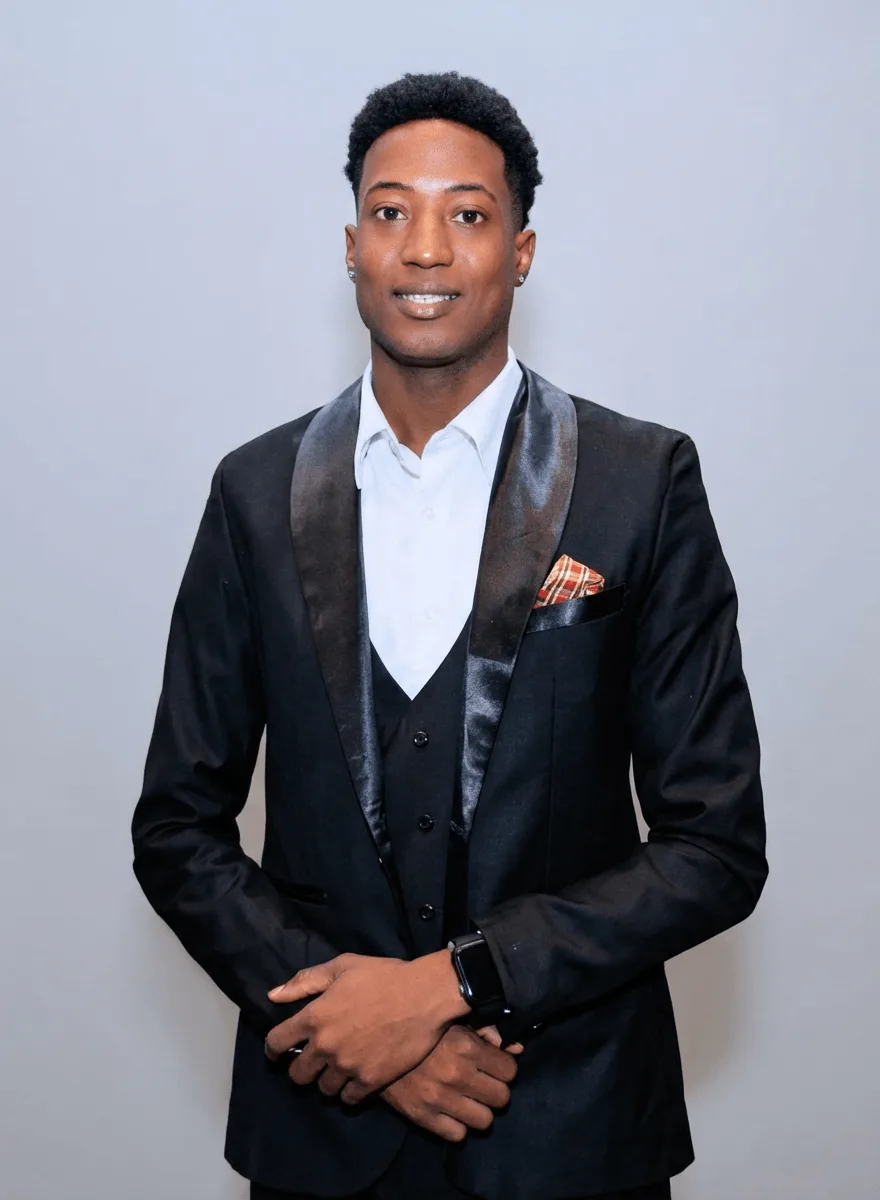
His weapon? Technical rigor forged through adversity. With limited resources, he taught himself to master Adobe Premiere Pro, DaVinci Resolve, Blender, and CapCut. Yet his ambition does not stop there. “As soon as I have more resources, I will invest in professional equipment,” he promises.
The Art of Videography
For Wegherley, being a videographer is not merely a technical profession, it is an art. “A videographer expresses through images and sounds emotions that cannot always be explained with words,” he says. He compares editing to a “second life,” a space where the creator recreates his own reality. This vision sets him apart. Where others see a tool, he sees a signature.
Today, Wegherley is focusing all his energy on a project close to his heart since high school: Don’t Touch My Little Sister. A romantic film that tells the story of how friendship can hinder love before love ultimately triumphs over hate. The script is finalized. What remain are colossal challenges primarily insecurity limiting filming locations, a lack of sponsors, and difficulties in mobilizing human and financial resources. But Wegherley stands firm. He knows that every great film begins with a leap into the unknown.
He is already projecting himself into the future. “In five years, he sees himself producing series, exploring other genres such as action films, and above all continuing to elevate Haitian cinema to new heights.” For Wegherley, one must always hold on to dreams despite the storms. He advises his peers: “Stay faithful to your dreams. Keep learning. Do not be afraid to innovate. Here, the industry is not always valued, but it is up to us to make the difference.”
Author

About the author
Marie Juliane DAVID
Marie Juliane David is a multilingual journalist, poet and novelist, and the founder and Director of Publications of <em>CreARTivity Magazine</em>, which she launched in January 2026 and publishes daily in English, French, Spanish and Haitian. To learn more about her and her work, visit her <a href="https://mariejulianedavid.com/" target="_blank" rel="noopener">portfolio</a>.
Leave a comment
Your email will not be published. Comments are moderated before they appear.